Stabilisation with expanded clay on the B 432 in Ahrensbök

In the Ahrensbök area, the federal road B 432 showed clear signs of settlement – the load-bearing layers had subsided over time, and the course of the carriageway was no longer permanently stable. The cause lay within the embankment itself: insufficiently load-bearing subsoil and a lack of relief in the upper structure.
The decision was made to carry out a complete soil replacement in the affected section – with the aim of stabilising the embankment in the long term while simultaneously relieving the subsoil. The solution: lightweight construction with expanded clay.
Soil replacement with expanded clay – efficient and relieving
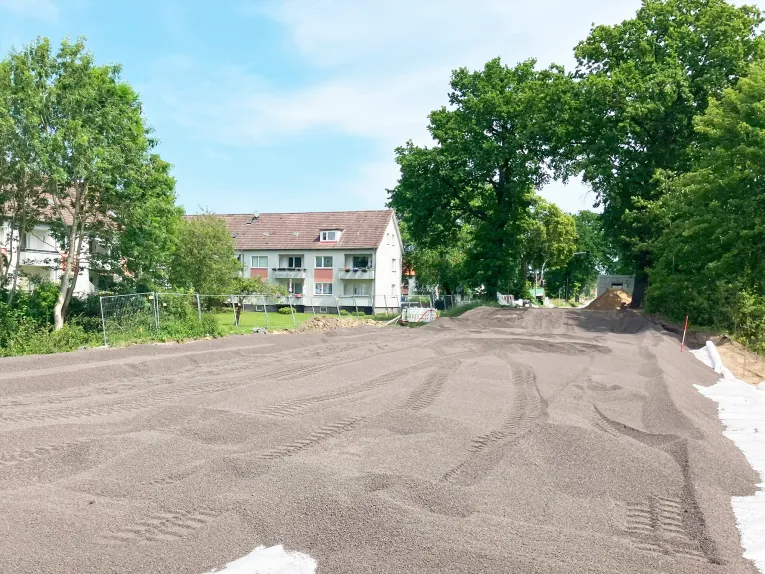
Firstly, the existing embankment was excavated to a depth of around three metres. The new structure was then installed step by step in accordance with the “Guideline on the use of expanded clay as a lightweight construction material in earthworks for road construction”:
• 30 cm crushed stone base layer, enclosed in a combination grid, load distribution EP
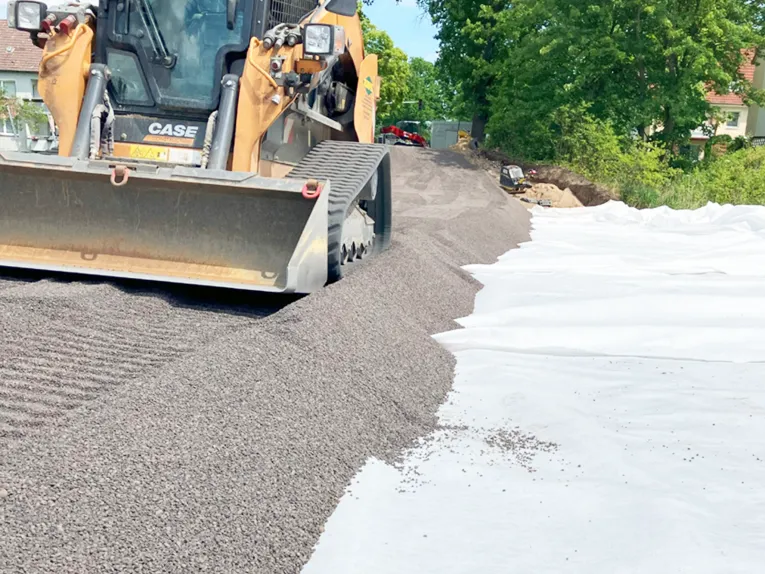
• 3 layers of 60 cm expanded clay each, enclosed in geotextile (fleece)
• 90 cm superstructure (frost protection + 26 cm asphalt)
The expanded clay was installed layer by layer directly into the excavation, with appropriate compaction. The geotextiles served as separation and filter layers to prevent material mixing and settlement.
FACTS
Project: Road renewal of federal road B 432
Location: Ahrensbök, Schleswig-Holstein
Client: State Road Construction and Transport Authority of Schleswig-Holstein
Contractor: STRABAG AG
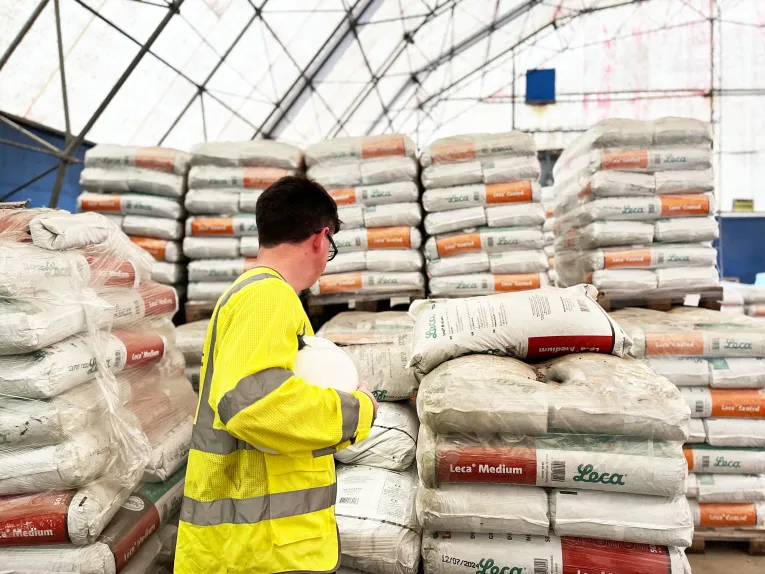
Product: 3,460 m³ LECA® 4–8 mm, crushed
Technical benefits in focus
The use of expanded clay significantly relieved the embankment body whilst maintaining high stability. The low bulk density of the material reduces stresses on the subsoil and effectively counteracts settlement issues. At the same time, expanded clay provides the necessary load-bearing capacity for the layer structure in road construction.
The advantage for planning and execution: fast installation, easy on-site handling, and a clear system structure. The material could be processed directly in accordance with the regulations without elaborate special solutions.
Conclusion
The project demonstrates how, with a well-thought-out structure and the targeted use of expanded clay, even critical infrastructure sections can be stabilised in the long term – economically proficient, technically sound, and compliant with regulations.
Downloads