TURNER STREET RETAINING WALL

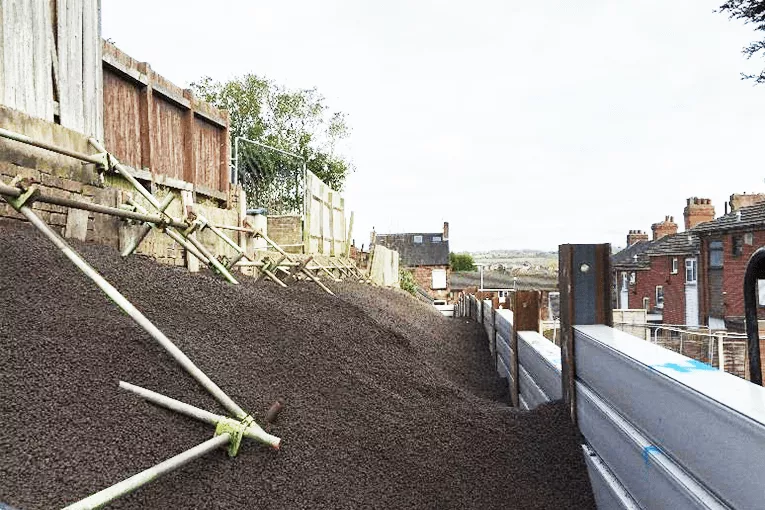
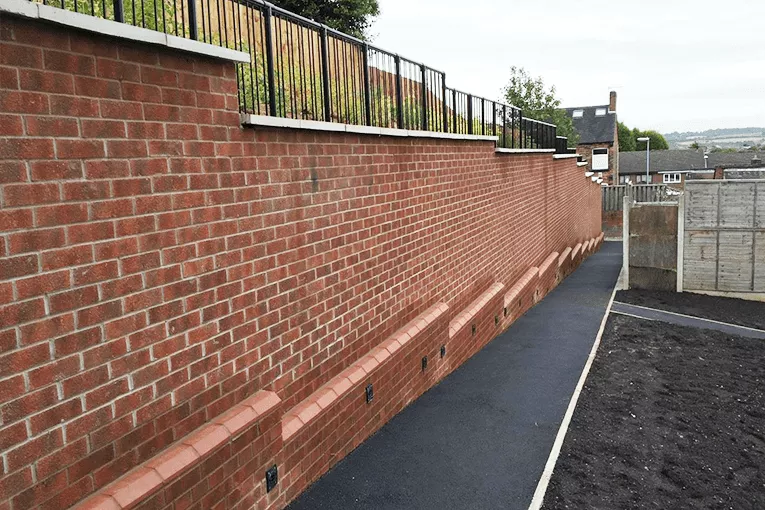
The existing wall was situated along a thin strip of land at the top of an embankment between two rows of houses forming the rear boundary to the terraced properties on Turner St. The height of the wall varied from 1.2m to 2m in height with the total combined height difference including the embankment ranging from 2.5m to 3.9m. Access to much of the site could only be sought via a narrow footpath running the length of the embankment toe at the back of the properties on Mount Street.
Access to the site was severely restricted. The entrance was through a small carpark via Mount Street and then via a narrow footpath running along the back of some houses. The footpath was around 1.5m wide and was not suitable for access with a sheet piling rig or excavator with pile driver. The site investigation report also identified mudstone at shallow depth (around 3m BGL) that posed drivability concerns without access for significant plant to drive the sheets or for pre-auguring works. Above the mudstone the ground was relatively poor removing the ability to safely batter the ground to excavate for the wall foundation.
FACTS
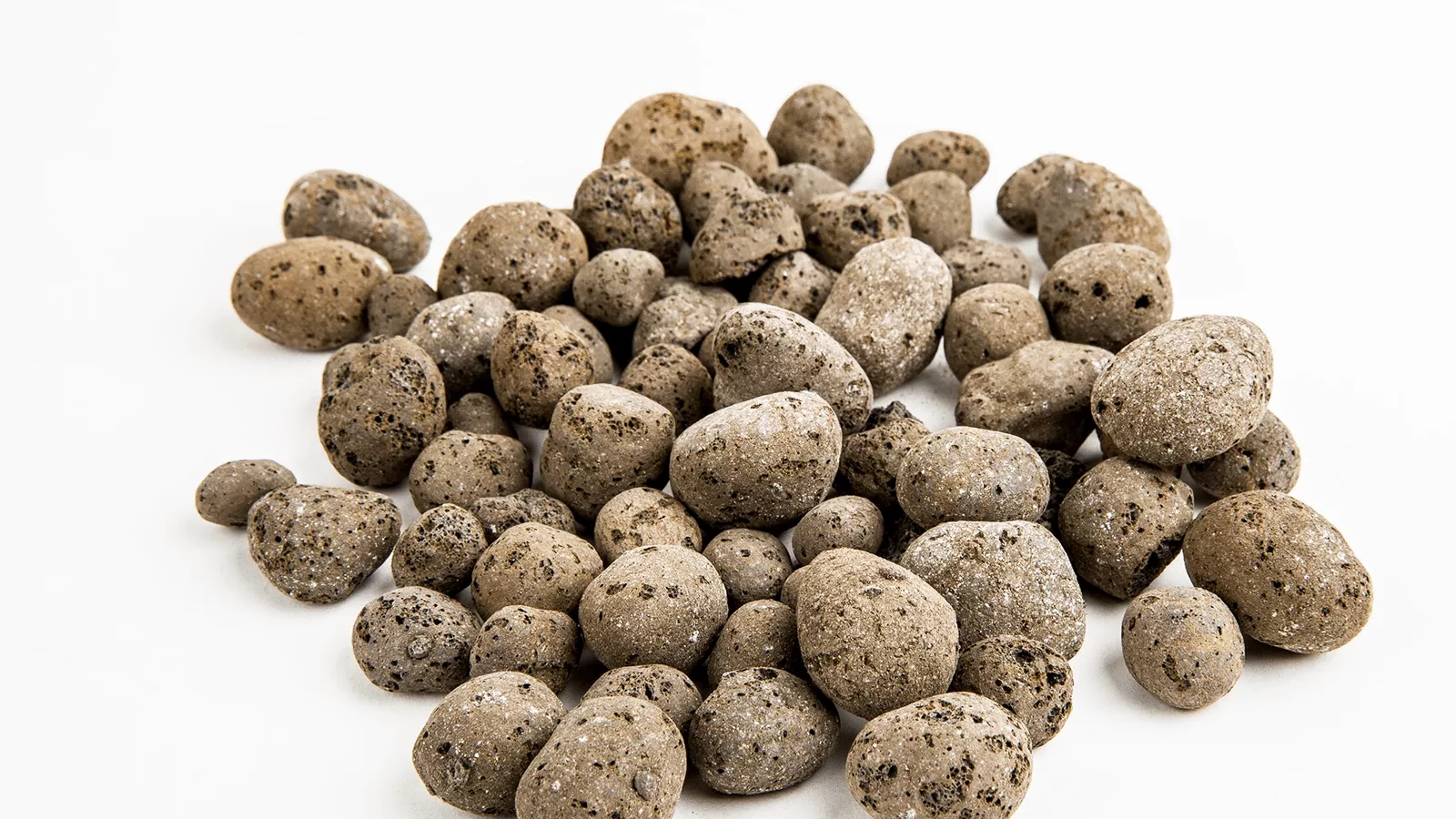
Amount of material: 55m3 of Leca® 10-20mm
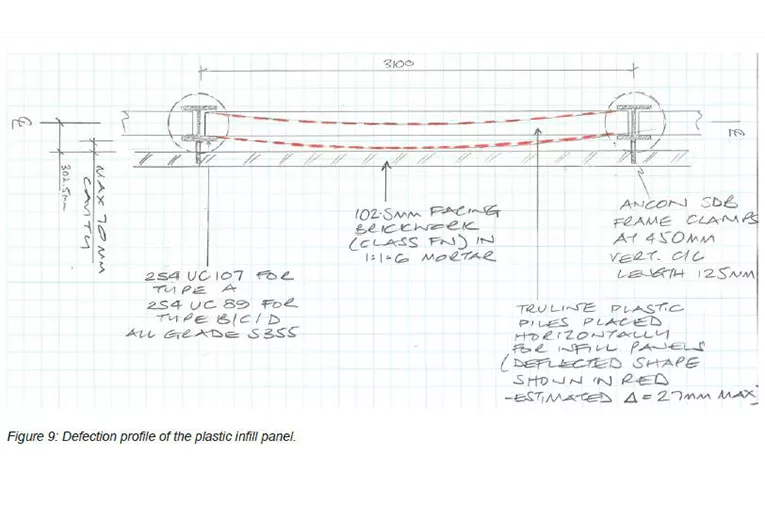
Interesting Fact: This project used plastic infill panel and a lightweight solution was required to allow for an increase in spacing between the posting - reducing the number of posts and overall construction costs.
Delivery Method: Pneumatic Delivery
Access Restrictions
There were vibration and noise issues with driving sheet piles so close to residential properties. The vibrations would also have detrimental effects on the condition of both the wall and existing temporary works.
Several options were considered. A gabion solution was looked at as it could be built insitu with small equipment, but the mass was so large that it encroached into the existing propping and created issues highlighted previously. A reinforced earth solution was also considered. It was an attractive option as the facing wall could be built using handheld tools and constructed on a nominal strip foundation at shallow depth. However, the length of the reinforcement required to resist the lateral earth pressures meant significant excavation at the toe of the existing embankment. It also clashed with the existing propping system.
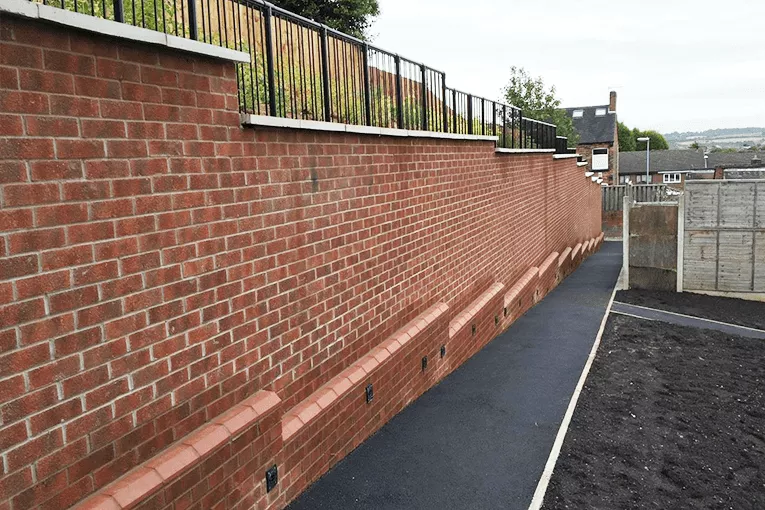
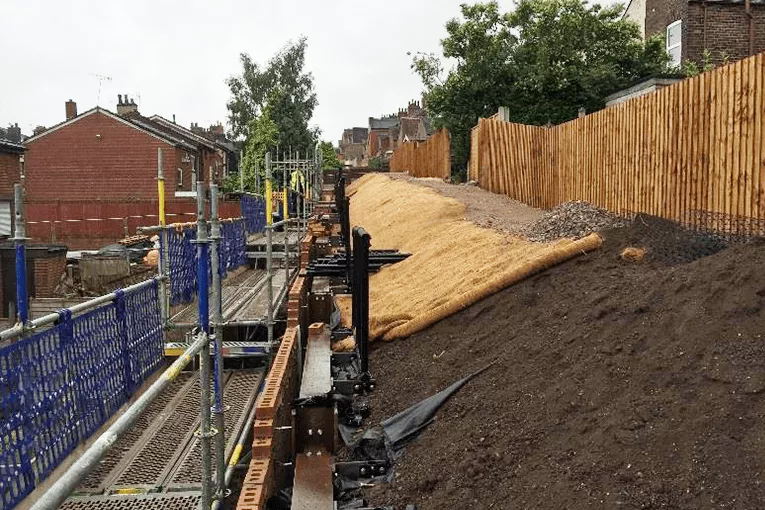
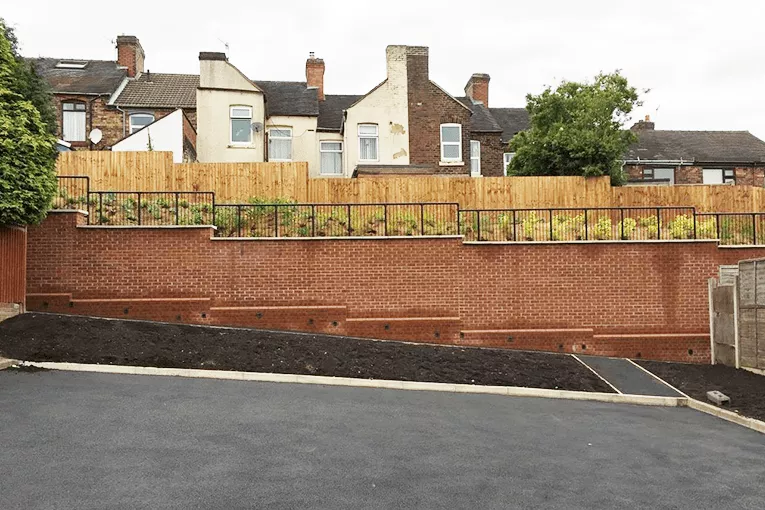
Underpinning or anchoring of the existing wall was discounted because of safety risks working near the dilapidated wall and amongst the existing scaffold propping. The use of anchors would also introduce further complexities given the anchors would be beneath private properties.
The solution
The presence of rock at a shallow depth favoured an embedded type of wall. The position of the retaining wall was to be relocated so the new wall needed to be built ‘out of the ground’ rendering a contiguous or secant pile wall redundant.
The application of a kingpost type system was deemed most appropriate. Through early collaboration with piling contractors, it was identified that 450mm diameter bore for the piles could be augured using a small remote operated SFA type rig that could manoeuvre down the narrow footpath. The kingpost sections could be sized to manageable lengths and weight to enable them to be installed from a small crane located in the car park. The design comprises of 19 kingposts spaced at 3m centres with a retained height varying between 1.4m and 3.4m accounting for variation in site geometry and required over dig allowance.
The geotechnical data from the additional lab testing confirmed equivalent drained mohr-coulomb parameters of phi=28° and c’=10kPa for the mudstone was suitable. This enabling the bore diameter and pile depths to be reduced to provide maximum efficiency. The sampling and testing of near surface ground also enabled accurate assessment of the stability of the existing slope and global retaining wall failure.
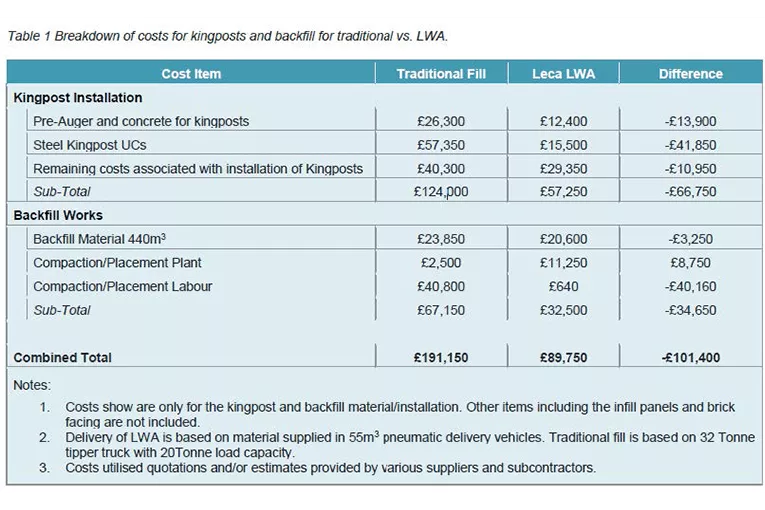
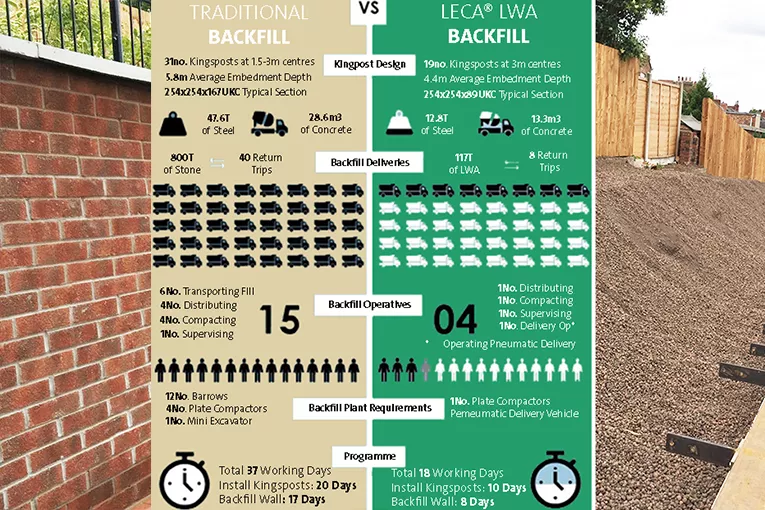
Leca®LWA - Lightweight aggregate
Although some of the buildability problems were resolved, access was still an issue with regards to backfilling between the old and new wall. No access behind the wall with compaction plant other than small Wacker plates would be viable without first removing the propping system and any operatives would be exposed to elevated risk being confined between both the old wall and the new stem.
Research was carried out on backfill materials that could be installed without the need for traditional compaction. Lightweight Expanded Clay Aggregate (LWA) was proposed that was supplied by a leading manufacturer, Leca. The material is rounded in shape and is lightweight so can be placed pneumatically via a 100mm diameter pipe at distances of >35metres.
This delivered several benefits:
- The LWA is delivered in 55m3 pneumatic lorries which could place the material via a pipe so no access for plant was required along the footpath.
- This method is quick taking approximately 2hr per 55m³ delivery
- No storage required on site where space was limited.
- 95% compaction can be achieved with pneumatic placement alone.
- Operatives could backfill from a safe position in front of the wall.
- The material could be easily placed around the existing scaffold propping that could be left in place to eliminate the risks associated with any staged removal.
- As the material is approximately a 5th the weight of traditional backfill this drastically reduced the pressures on the back of the retaining wall. This enabled the king post elements to be value engineered:
- The augured holes for the king posts were reduced by approximately 50% providing material and programme benefits on the auguring works.
- The steel posts were shorter with a smaller section that reduced material costs and handling weights.
- The infill panels between the king posts needed to resist far lower earth pressures and therefore their strength could be reduced with associated savings.
There were numerous health and safety benefits to adopting the lightweight aggregate:
- Final compaction of the material could be achieved with a small petrol Wacker plate. This eliminated the compaction plant required for traditional fill therefore making labour and programme savings. The compaction was only required once most of the fill was placed, avoiding most of the work behind the wall and reducing the risk to operatives.
- The shorter backfill duration reduced the exposure of surrounding residents to noise and vibration when compared to a traditional fill operation.
- The material is delivered slightly moist to avoid dust that would affect both the health of operatives and surrounding properties.
- As the material is so light, significantly higher volumes of material can be transported per delivery vehicle, reducing deliveries and minimising traffic that could have a detrimental impact on the surrounding roads and residencies.
- The permeability and drainage properties of Leca exceeds those of traditional drainage gravel backfill simplifying the construction process to one material type.